
Employee recognition has never been more important.
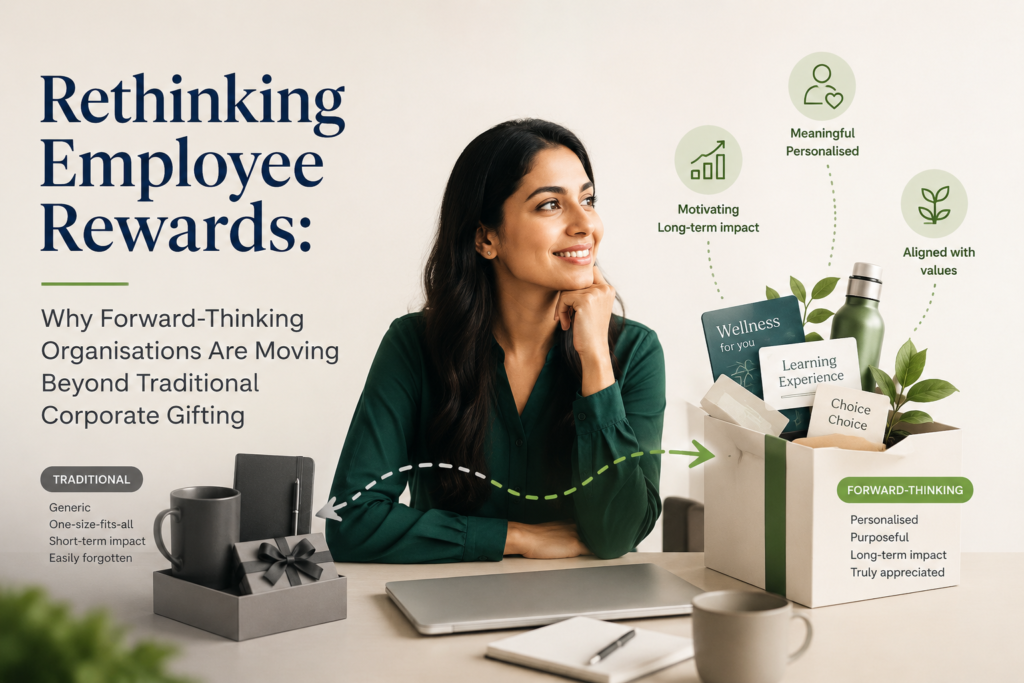
In today’s competitive talent market, organizations are investing heavily in employee engagement, retention, workplace culture, and employer branding. Yet many reward and recognition programmes continue to rely on traditional incentives such as gift vouchers, merchandise, hampers, and cash bonuses rewards that often create short-term excitement but limited long-term impact.
As workforce expectations evolve, HR leaders are beginning to ask a different question:
How can rewards create lasting value for employees while strengthening engagement, loyalty, and financial well-being?
The answer may lie in shifting from consumable rewards to value-building rewards.
This article explores why employee recognition is evolving, what today’s workforce expects from employers, and how innovative organizations are aligning recognition programmes with long-term employee wellness and financial growth.
The Reward Problem Nobody Talks About
Let’s start with a reality most HR leaders already know.
The gift arrives on time. The packaging looks impressive. The budget gets approved. Employees say thank you. And within a few weeks, most people barely remember what they received.
This isn’t because organizations don’t care. It isn’t because HR teams aren’t trying. It’s because traditional corporate gifting was designed for a different era.
Many commonly used rewards today suffer from the same challenge:
- Gift vouchers are redeemed and forgotten.
- Hampers are consumed within days.
- Merchandise often remains unused.
- Cash bonuses disappear into monthly expenses.
- Generic gifts fail to create emotional connections.
The result?
Organizations spend significant budgets on recognition programmes without creating lasting employee value.
Employee Recognition By The Numbers
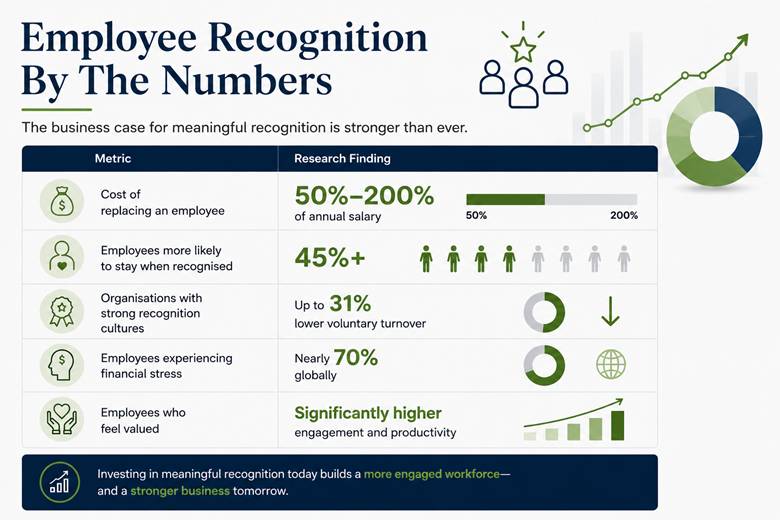
The business case for meaningful recognition is stronger than ever.
| Metric | Research Finding |
| Cost of replacing an employee | 50%–200% of annual salary |
| Employees more likely to stay when recognised | 45%+ |
| Organisations with strong recognition cultures | Up to 31% lower voluntary turnover |
| Employees experiencing financial stress | Nearly 70% globally |
| Employees who feel valued | Significantly higher engagement and productivity |
Sources: Gallup Workplace Research, SHRM, Deloitte Human Capital Trends, PwC Financial Wellness Survey.
Why This Matters
Recognition is no longer simply an HR initiative. It is a business strategy.
Every employee who feels genuinely valued is more likely to:
- Stay longer
- Engage more deeply
- Recommend the organisation
- Contribute discretionary effort
- Build stronger relationships with customers
The challenge is ensuring that recognition creates a lasting impact rather than a temporary reaction.
The Changing Expectations of Today’s Workforce
Today’s employees are evaluating employers differently than previous generations.
Compensation remains important. However, employees are increasingly looking for organisations that support their broader life goals.
This includes:
✓ Career Growth
✓ Mental Well-being
✓ Work-Life Balance
✓ Flexibility
✓ Financial Wellness
According to multiple workplace studies, financial stress has emerged as one of the biggest hidden drivers of employee distraction and disengagement.
Many employees are silently managing:
- Home loan obligations
- Family responsibilities
- Education planning
- Retirement concerns
- Rising living expenses
These pressures don’t disappear when employees log into work each morning. They influence focus, productivity, and overall well-being.
A Statistic Every HR Leader Should Know
70% Of employees report experiencing some level of financial stress that impacts their work performance.
Source: PwC Employee Financial Wellness Survey
While organisations invest heavily in wellness programmes, one of the most influential contributors to employee well-being often receives the least attention: Financial security.
The Evolution of Employee Rewards
Employee recognition has evolved significantly over the years.
Recognition 1.0
- Certificates
- Trophies
- Appreciation letters
↓
Recognition 2.0
- Gift cards
- Merchandise
- Cash bonuses
- Festive hampers
↓
Recognition 3.0
- Financial wellness rewards
- Wealth-building benefits
- Digital assets
- Long-term value creation
The next generation of employee recognition is increasingly focused on helping employees build a stronger future, not simply celebrating a moment.
What Employees Actually Want From Recognition
One of the biggest misconceptions in corporate rewards is that employees want larger rewards.
In reality, employees often value rewards that feel more meaningful.
| Meaningful rewards share three characteristics | ||
| Personal Relevance | Long-Term Value | Emotional Connection |
| Employees want rewards that connect to real-life goals and aspirations | Employees appreciate rewards that continue providing benefits after the celebration ends. | Recognition becomes memorable when employees believe their employer genuinely cares about their future |
This is where many traditional rewards fall short. A voucher creates a transaction.
A meaningful asset creates a memory.
Traditional Rewards vs Future-Ready Rewards
| Factor | Traditional Gifts | Wealth-Building Rewards |
| Immediate excitement | High | Moderate |
| Long-term value | Low | High |
| Supports financial wellness | No | Yes |
| Emotional recall after 6 months | Low | High |
| Employee perception | Expense | Investment |
| Retention impact | Limited | Stronger |
| Employer differentiation | Low | High |
The future of employee recognition isn’t necessarily about spending more.
It’s about creating more value from the same investment.
The Hidden Cost of Forgettable Rewards
Imagine an organisation spends ₹5 lakh on festive gifting. Employees appreciate the gesture. The gifts are used. The celebrations end.
Three months later:
- The gift is gone.
- The memory has faded.
- The emotional connection has disappeared.
Now imagine that same budget contributes toward an employee-owned asset that continues to exist months or years later.
The employee doesn’t simply remember receiving it. They continue seeing it. Tracking it. Valuing it.
That transforms recognition from an expense into an ongoing reminder of appreciation.
The Financial Wellness Layer Most Organisations Are Missing
Financial wellness is rapidly becoming one of the most important pillars of employee experience.
When employees feel financially secure, organisations often see improvements in:
- Productivity
- Engagement
- Retention
- Workplace satisfaction
- Long-term loyalty
Forward-thinking HR leaders are increasingly recognising that wellness programmes should not only address physical and mental health.
They should also address financial confidence.
A recognition strategy that contributes—even modestly—to an employee’s financial future can become a meaningful extension of an organisation’s broader wellness agenda.
A New Approach to Employee Recognition
This is where digital gold and silver are beginning to emerge as an innovative alternative within corporate reward programmes.
Instead of providing rewards that depreciate or disappear after use, organisations can provide assets that employees can hold as part of their personal wealth-building journey.
Digital precious metals offer:
✓ Ownership in the employee’s name
✓ Secure storage
✓ Easy digital distribution
✓ Long-term holding potential
✓ Alignment with financial wellness objectives
Whether recognising:
- Outstanding performance
- Work anniversaries
- Sales achievements
- Festive celebrations
- Employee referral programmes
- Onboarding milestones
Organisations can transform recognition into an opportunity for lasting value creation.
What Forward-Thinking HR Leaders Are Prioritising in 2026
| Meaningful rewards share three characteristics | ||||
| Financial Wellness Programmes | Personalized Recognition | Employee Ownership Mindset | Long-Term Retention Strategies | Future-Focused Benefits |
| Helping employees build stronger financial habits. | Moving beyond one-size-fits-all rewards. | Creating stronger emotional investment in the organisation | Building loyalty through meaningful experiences | Supporting employees beyond their immediate work responsibilities |
Recognition programmes that align with these priorities are likely to create stronger engagement and organisational loyalty.
Beyond Employees: Extending The Same Principle
The same philosophy applies beyond employee recognition.
It can also be used for:
Client Appreciation
Providing meaningful value rather than temporary gifts.
Channel Partner Incentives
Creating stronger long-term business relationships.
Customer Loyalty Programmes
Rewarding customers with assets instead of consumables.
Sales Incentive Programmes
Aligning performance rewards with long-term value creation.
In every scenario, the principle remains the same: The most effective rewards are not those that create the biggest reaction today. They are the rewards that continue creating value tomorrow.
What Leadership Teams Care About
When evaluating reward programmes, leadership teams increasingly ask:
- Does this improve retention?
- Does this strengthen engagement?
- Does this support employee wellness?
- Does this improve employer branding?
- Does this create measurable value?
- Does this justify the investment?
The future of recognition will be judged less by what is distributed and more by the impact it creates.
The Future of Corporate Recognition
Employee expectations are changing.
Recognition programmes must evolve alongside them.
The next generation of employee rewards will focus not only on appreciation but also on empowerment.
Forward-thinking organisations are beginning to recognise that employee recognition should support the employee’s future not simply acknowledge the past.
As workplace priorities continue to shift toward financial wellness, personalised benefits, and long-term engagement, reward programmes will need to create deeper and more meaningful connections.
How Gfolio Fits In
At Gfolio, we believe recognition can be more than a momentary gesture.
Through Digital Gold and Silver rewards backed by physical precious metals stored in secure insured vaults, organisations can provide employees with assets that continue creating value long after the occasion has passed.
Whether for festive gifting, work anniversaries, employee rewards, client appreciation, or channel partner programmes, Gfolio helps organisations align recognition with financial wellness and long-term value creation.
“Take care of your employees and they’ll take care of your business.”
— Richard Branson
The future of employee recognition isn’t about giving more.
It’s about giving smarter.
The organisations that win the talent battle over the next decade won’t necessarily be the ones with the biggest reward budgets.
They’ll be the ones whose rewards continue creating value long after the celebration ends.
Because the most meaningful rewards are not simply received and consumed.
They continue creating value long after the moment of recognition has passed.